

Bret Stephens has been one of the more honest voices on Israel in American opinion journalism, which makes his recent column worth taking seriously and, in several places, worth pushing back on hard.
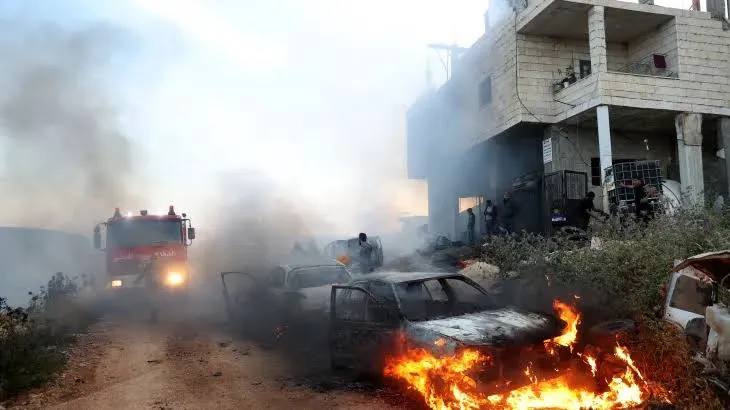
He is right that extremist settlers have committed genuine crimes in the West Bank. Some of it is ugly. Mosques burned. Palestinian property torched. People killed. He is right that Defense Minister Israel Katz has refused to use administrative detention against suspected Jewish extremists, the same legal tool that gets applied to Palestinian suspects without much hand-wringing. These are real failures and no serious person should pretend otherwise.
But Stephens does not stop there, and the further he goes the shakier the ground gets.
He calls what is happening in the West Bank “anti-Palestinian settler terrorism.” He says it threatens not just Palestinian lives or Israel’s reputation but Israel’s security, its statehood, and Zionism itself. He warns of a third intifada. He invokes the specter of Lebanonization. These are not small claims. They deserve scrutiny, not just agreement.
Take the 867 figure. The IDF recorded 867 incidents of “nationalistic crime and settler violence” in 2025. Stephens cites this as evidence of a crisis that has become routine. What he does not tell you is what actually gets counted in that number. The Israeli security establishment’s definition of a nationalistic incident is broad: graffiti, trespassing, grazing disputes, property damage of various kinds, alongside genuine violent attacks. The IDF’s own internal assessment puts the number of hardcore perpetrators at around 70 people. Seventy. In a settler population of several hundred thousand. Netanyahu called them roughly 150 juvenile delinquents, which is politically convenient, but the underlying data is not as far from that description as Stephens implies. This is a fringe. A dangerous, under-prosecuted fringe that should face the law. But calling it a systemic terror campaign is a different claim entirely, and the numbers do not support it.
The terrorism label itself deserves a harder look. Terrorism has a meaning. It is the deliberate targeting of civilians to produce political fear through violence. October 7 was terrorism. The Palestinian Authority’s martyr payment program, which has been sending monthly checks to the families of people who murdered Jewish civilians for decades, is institutionalized terrorism. When settlers burn a mosque or attack a stonecutting factory, those are serious crimes. They are not a terror campaign. Conflating the two does not clarify anything. It erases a distinction that Israel’s defenders have spent decades trying to establish and hands that erasure to people who have been working toward it for years.
Then there is the question of Matan Vilnai. Stephens leans on the letter Vilnai organized, signed by retired senior officers, as evidence that serious security professionals are alarmed. Vilnai was at Entebbe. He served in a previous Netanyahu government. The biography is real. What Stephens does not mention is that Vilnai has spent his post-military career chairing Commanders for Israel’s Security, an organization that has been pushing for Israeli territorial withdrawals for years and whose positions, by any honest accounting, track closely with the Israeli left’s platform. These are not reluctant professionals stepping forward with a verdict they wish they did not have to deliver. They are political actors who have been in sustained opposition to the current government and who found in settler violence a cause that gives their opposition a moral weight it otherwise struggles to claim. Read the letter. Do not treat it as an oracle.
Stephens argues that a government capable of assassinating a Hamas leader in a Tehran guesthouse ought to be capable of stopping Jewish thuggery in the West Bank. It is a rhetorically effective line. It is also a false comparison. Covert operations against a foreign terrorist organization operating in a hostile state are not the same instrument as domestic law enforcement in a territory whose jurisdiction, civil administration, and military command are divided by decades of Oslo-era agreements. Netanyahu is not choosing impotence. He is governing a parliamentary coalition under wartime conditions, with real political constraints that did not appear from nowhere. That is not a defense of every choice he has made. It is a description of the environment in which he is making them.
On David Zini’s avoidance of the phrase “Jewish terror,” Stephens treats it as institutional cowardice. Consider a different reading. Zini runs an organization whose operational effectiveness depends on legal and definitional precision. “Terror” carries specific implications for how suspects are handled, prosecuted, and surveilled under Israeli law. Applying it to a category of conduct that ranges from graffiti to arson to murder creates procedural problems that a serious intelligence professional has every reason to avoid. A columnist finds the word “frictions” unsatisfying. A Shin Bet director has to actually manage the problem.
The Lebanonization warning is the most dramatic element of the column and the one that falls apart fastest. The IDF compiled and published the statistics Stephens is citing. Israeli security forces arrested more than 130 people in a single weekend following the most recent West Bank violence. The IDF’s own commanders went on record about their frustration with their inability to contain the problem. That is not what state collapse looks like. That is what a government with real failures looks like when it is still functioning well enough to document and arrest.
Israel spent two years managing a hostage crisis that consumed its government, its military, and its public, while watching Iran close in on a nuclear threshold and facing a Hezbollah arsenal that would test most standing armies. Its real enemies are in Tehran, in Beirut, in whatever is left of the tunnel network under Gaza. A column that frames 70 extremists in the hills of Judea as an existential test for Zionism, while those threats remain, is not warning Israel. It is looking away from what is actually coming.
